Saturday, January 9, 2010

One Grain of Rice (Slightly Belated)


When I was younger, one book that both my brother and I enjoyed very much was One Grain of Rice, a folktale by Demi. It is a picture book with beautiful illustrations depicting a historical India. The story goes that a Raja thought that we was wise and fair to his people, most of whom were rice farmers. He took most of their harvest each year to keep safely in the royal storehouses in case of famine. Then, one year, almost all of the crop failed and the starving peasants went to the Raja, begging for the rice that he had promised. But in the interest of self-preservation, he denied them, not knowing how long the famine would last and needing rice for his own feasts. So the people continued to starve.
      Then, one day a young girl was walking past the royal rice-carriers when she noticed that one of their bags had a hole and was spilling rice. Being very clever, she walked beside them and caught all of the rice in her skirt. When they arrived at the palace, she was so honest that she returned all of the rice to the Raja. He was impressed, and offered to grant her any wish. She explained to him that all of the people were starving, and asked that he give her one grain of rice that day, then gave her two the next day, and four the next, doubling the amount each day for a month.
     The Raja agreed immediately, thinking that the girl was foolish to ask for so little. Of course, he had not mastered the subject of mathematics, and by the end of the month, he had given the girl all of his rice. She then turns around and distributes it the the hungry people. One thing to take note of is that despite the fact that he realized that all of his rice was disappearing, the Raja kept his word and did not go back on his promise. 
     There are a few different messages in this story. The first is that generosity is key to success in life. The Raja will not give his people rice, and he loses big by the end of the story. The main protagonist is very generous. She does not keep all of the rice for herself, as the Raja did. I think that this is a great message to send to kids, especially in our material age. The other good message is that anyone can change the government and that even the seemingly smallest person can have a bearing on a ruler.
      A final positive moral is that education is quite important. If the Raja had had as good of a grasp on simple math as the girl, the story likely would have had a different ending. It is clearly saying that knowledge is power.
     In fact, I could not find any examples of bad morals or "brainwashing" in this whole book. Not all of the messages that we give children in media are negative. There are good ones too!

Tuesday, January 5, 2010

The Ethics of Advertising


The short clip that we watched in class yesterday really got be thinking about the ethics of targeting children in advertisments. Personally, I do not think that there is any ethical problem with targeting the age-group that the prodct is designed for. That is, after all, the most effective way to sell something, which is all any company is trying to do. If the "nag factor" is what makes adults more likely to buy a product, then the realy problem lies in parents' attitudes toward their own children. If a child learns early on that they can get anything that they want from their parents merely by nagging them, then that lesson will stick. The parents are allowing this cycle to begin the first time they cave in to their child's wanting. The lessons that parents teach the children can have much more bearing on the way that their children develop than the media that they absorb. However, sucessful parenting may include limiting this media.
          This said, I did find one study that shows that advertising a certain type of product very negatively effects children, both mentally and physically. This is the advertising of food. A study by the Kaiser Family Foundation that I came across (view it here) suggests that the main reason that childhood obesity has become such a problem in the past few years is due to food advertisements directed at children. It says that the average child will spend almost six hours in "screentime" (TV, computer, gaming) every day. It also said that every year, each child will have seen over 40.000 commercials on TV alone. I found this to be the most telling sentence: "The majority of ads targeted at children are for food: primarily candy (32%), cereal (31%), and fast food (9%)". Although advertising for toys and chuckie-cheese's is not really that harmful, this clearly is.
       Ads for non-food items will bombard the average American daily for the rest of our lives. What better time to prepare for this than during our childhood, when our parents can help us to regulate our purchasing and consuming? Food advertising, on the other hand, is quite harmful to children, many of whom have parents who also struggle with obesity and overeating. This habit will cause even more health problems later in life that are tied to obesity, causing the health care system billions every year.
      This may seem like overkill to some, but after reading this study, I have come to believe that food products should not be advertised on TV to anyone, regardless of age. Thoughts?

Thursday, December 17, 2009

To Change a Name


One aspect of names that interests me very much is the way that they can change over the course of a person's life. When children are very young, people often refer to them by nicknames or "pet" names. These names can be closely related to the child's actual name, or have no relation to it at all. This phenomenon seems to coincide with the philosophy behind modern childhood, as defined by the prologue to Huck's Raft. Stephen Mintz says that children were considered "innocent, malleable, and fragile creatures who needed to be sheltered from contamination". I believe that when a parent or other adult calls a child by a pet name, they are treating them as if they are not yet mature enough to bear their full name.This said, I think that nicknaming a child helps adults to become closer to the child on a more personal level earlier on in their life. I do not think that this is necessarily a bad thing, so long as the nicknaming ends before adolescence. 
       On the topic of adolescents, we also use nicknames, but I think that it is for a diferent reason than parents do. The reason why teens give themselves and their friends nicknames relates to the first question on our childhood opinionaire: Are children their parents' possessions? Teens make efforts to become their own people, and therefore feel the need to remove themselves from their parents and take charge of their own lives to a greater extent. Giving alternate names does exactly this.
        I have personal experience with this. When I was in third grade, I decided that I wanted to change my name from Nicole to Lizzy, after my middle name, Eizabeth. I went to my parents one day and informed them of this, and I must admit that I think they thought it was just a phase that I was going through. So, to make sure that I really cared about doing this, they told me that I was allowed to change my name, as long as I wrote personal letters to all of my teachers and relatives, explaining the situation to them. Apparently, I really did care, so I wrote the letters and everyone now calls me Lizzy.
     I was a very independent child, and although I do not remember third grade very well, there is no doubt in my mind that I did this to take more charge of my own name, and therefore my own life.
       The final instance when a name changes is usually around the time that a person gets married. In America, the norm is that the woman takes her husband's last name, and his name is passed on to all of their children. To me, this seems to go back to the times when a woman would go off to join her husband's family (along with a dowry) and often never see her family again. It implies some ownership and dominance that the man has over the woman.
      One of the adults in my life that I think has the coolest name actually changed his first name, then took his wife's family name when they married. Against the grain? Yes. But it defines him as a person and I believe that he would be a very different person today if he had not done this. 
     So, what's in a name? Quite a lot.

Sunday, December 13, 2009

Tom Deluca


Did anyone else see the Tom Deluca hypnotist show last night? I did, and I would highly recommend it to everyone in our school, and not just because it was hilarious. As soon as the show started, my disbelief vanished. There were about twenty seniors onstage for whom the hypnosis had worked (it wasn't effective for about five people, who returned to the audience).       The subjects went to sleep and Mr. Deluca told them things to do. He would then say the trigger word to wake them up and they would begin to act however he had instructed. At the conclusion of the show, he woke them up and they remembered nothing of what they had done.
     Weird? Yes.
     When I got home, I did some internet sleuthing to find out more about what hypnosis is exactly and how it works. (To view the site I did, click here. I also corroborated my findings with a few other sites.) The main misconception that I found was that the hypnotist is actually controlling his subjects and could make them do anything that he wanted them to do. This is false. 
      For starters, a hypnotist cannot hypnotize someone who is unwilling. This is not some moral code of conduct. It is just physically not possible to do. This is because the hypnotist is not actually employing any type of mind-control. He is really just serving as a guide to help the subject tap into his or her subconscious mind. What happens during hypnosis is that the left side of the brain slow down while the left side (the imaginative one) begins to take control. It is really a state of "heightened suggestibility" when adults will throw themselves into playing pretend, the same way that children do, without much fear of embarrassment. This said, you still maintain your moral code and some social inhibitions. For example, if the hypnotist said to take your clothes off, almost no one would actually comply. 
    So what I have gathered is that hypnosis is really one way to tap unused imagination. Even the most unimaginative people can come up with the most interesting things while under hypnosis. This has interesting implications for the world. What if hypnosis were more widely used, and not just for stage shows and therapy? With all that untapped human potential could we accomplish much more than we currently do? I think so.

Interesting Words

Recently a foreign exchange student from Sweden moved in with my family and I. English is her second language, and although she speaks excellently, some things just don't translate well. While explaining slang phrases such as "epic fail", I began to wonder about the nature of slang and how languages evolve over time.
     One main thing that I noticed was that words like great, awesome, and epic have very positive modern meanings. They all signify that something is very good and tend to have positive connotations. If you read any older English literature, however, these words simply mean "quite large" and have neutral connotations.
    This phenomenon strikes me as strange, and I have been trying to think of a valid explanation for it. One theory is that America is the land of "bigger and better" so maybe our language has started to reflect that. We always want bigger cars, bigger tvs, and bigger cheeseburgers. 
    Any theories?

Monday, December 7, 2009

Stars Coming Out


Earlier this week, Meredith Baxter, former star of Family Ties, publicly stated that she is a lesbian. The press, of course, accepted her story with open arms, eager for some hot new gossip. Here is the article that I found: Coming out in Hollywood not always easy. One interesting point that the article brought up was that gay or lesbian actors might not be able to play a straight character after they come out, depending on how public their declaration was. The logic is that their sexuality will detract from the overall movie. Girls won't swoon over the heartthrob in a romantic comedy if they know that he is gay.

      My question is, Are famous people who have more media coverage more or less obligated to be open about their sexuality? Do they have a responsibility to the public to share things like this, that are so socially volatile? Or do they deserve to keep more secrets, since their lives are already so public?
      I believe that Hollywood stars to are not straight have to responsibility of being public about their sexuality. Since they live so much of their lives in the spotlight, they get immense media coverage (maybe more than they should). Many Americans consider the lives of Hollywood stars to be perfect, ideal, and sometimes even normal. 
      So when a person who is widely known, liked, and respected declares publicly that they are gay, it becomes much easier for the average struggling teen to do the same. If a teen's family sees a celebrity coming out, it could make them more comfortable with the idea of their own child being different.
       I agree with the article that coming out might effect an actor's career, but so might many other things, such as marriage, divorce, having children, or scandal. If someone chooses to live their life under the public eye like these people do, they should have a better career plan then one that could be ruined by a single headline. They have a moral responsibility to use the media to its fullest advantage and make coming out of the closet something that no one should be afraid of. 
     What do you think?

Tuesday, December 1, 2009

"Obama, Afghanistan"

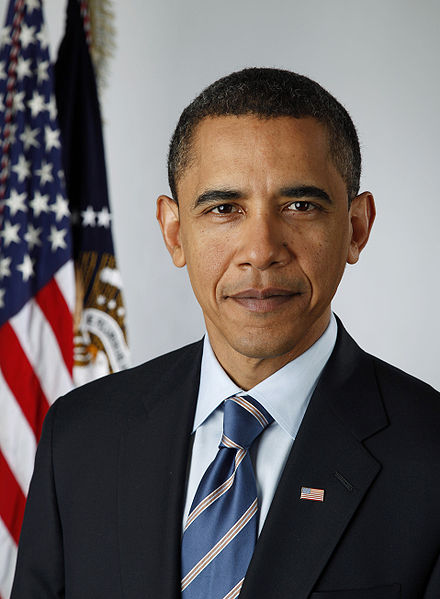
Just a few hours ago, President Obama delivered a long-anticipated speech on his plan for the future of the War on Terror. (If you missed it, click here to view part of the speech.) Obama spoke from West Point, New York. Personally, I liked his speech very much. Aside from his incredibly beautiful rhetoric, which we have come to expect from our Commander in Chief, the speech really demonstrated a clear plan of what actions the government plans to take overseas in the next few years. Rather than being a lot of pretty phrases and words inspiring the public's patriotism, Obama went into some detail about troop deployment and even provided a timeline. That in itself is a bold move--providing the public with actual dates that we can hold him responsible for.
      Despite all of these positive points of his speech, Obama faces many critics, as always. CBS News has posted a few of the "early responses" to Obama's speech. I would like to repspond to a few of these.
        The first of these took issue with the fact that Obama has set a date when he is going to pull the troops out of Afghanistan and send them home. Senator McCain said, "Success is what dictates dates for withdrawal and if we don't have that success and we only set an arbitrary date, it emboldens our enemies and dispirits our friends." I think that the exact opposite is true. If you do not have clear goals and a known destination, no matter how quickly you go or how much you accomplish, you will never achieve something if you don't know what exactly you are trying to achieve. In other words, running as faster than all of the others in the race only ensures victory if you are aiming yourself at the finish line. We, as a nation, got so used to having ambiguous causes for going to war, that it seemed as if we might have troops overseas for all the foreseeable future. A definite timeline is refreshing and gives our troops hope that the end is in sight. It tells our enemies that we are sure of ourselves and confident. 
       The second main objection to the new plan was the cost. Independent Senator Bernie Sanders said, "I agree with President Obama that it would be a setback for democracy and stability if the Taliban regained power, but I have serious concerns…why in the midst of a severe recession – with 17 percent of our people unemployed or under-employed and one out of four kids on food stamps – are we going to be spending $100 billion a year on Afghanistan when we have so many pressing needs at home?" One thing that Obama said in his speech that really stuck out to me was that we, as a nation, have forgotten the connection between national security and out economy. Despite the cost of the war, I believe that our current government is responsible with our tax money and that this war will really help our economy in the long run. There is one thing that I really don't understand, though. It seems like wars used to be amazing for our economy, even bringing us out of the Depression. Why is the opposite now true?
      I am sure that there are some problems with Obama's plan, but shouldn't we be glad that the American people have been given any plan at all?